Y Combinator Startup School Bangalore Showcases Young Indian AI Builders Vibe Coding and Gen Alpha Entrepreneurs – Firstpost

* NewsIndiaOpinionCricketEntertainmentBusinessSportsTechPhotostoriesHealth
* WorldUS News
* Videos
* Explainers
* Opinion
* Lifestyle
AI Search
Sign In
Sections
- Home
- Live TV
- World
- Entertainment
- Explainers
- Cricket
- Sports
- Opinion
- India
- Tech
- Auto
- Lifestyle
- Health
- Business
- Web Stories
- Shows
- Videos
- Impact Shorts
Shows
Events
- IPL 2026
- Raisina Dialogue 2026
- Putin in India
- Independence Day
- Firstpost Defence Summit
- Budget 2025
- Bihar Election
- Delhi Elections 2025
- Champions Trophy
Trending:
- West Asia war updates
- Strait of Hormuz
- Hungary election
- IPL Glove Controversy
- Trump tariffs
- Asha Bhosle dies
advertisement

YC Startup School in India: Inside the youth-led AI wave redefining the future of work
AI Search
Sections
- Home
- Live TV
- World
- Entertainment
- Explainers
- Cricket
- Sports
- Opinion
- India
- Tech
- Auto
- Lifestyle
- Health
- Business
- Web Stories
- Shows
- Videos
- Impact Shorts
Shows
Events
- IPL 2026
- Raisina Dialogue 2026
- Putin in India
- Independence Day
- Firstpost Defence Summit
- Budget 2025
- Bihar Election
- Delhi Elections 2025
- Champions Trophy
10
×
Vantage ### Iran Opens Hormuz Strait as Trump Says Peace Deal 'Very Close' | Vantage on Firstpost
YC Startup School in India: Inside the youth-led AI wave redefining the future of work
Nisha Ramchandani• April 13, 2026, 14:26:50 IST
advertisement
Y Combinator hosts first Startup School in Bengaluru this weekend, drawing 2,000 young AI-focused innovators from across the country while highlighting early entrepreneurship beyond metros.
Advertisement
)
For a generation that is already building, shipping, and earning before it graduates, YC Startup School’s arrival in India is less a beginning and more a recognition. (File Photo)
Loading Audio Player By Instaread, Please Wait...
One of the biggest events this summer in Bengaluru is Y Combinator’s first-ever Startup School in India. Designed for early-stage founders, it will impart a free online course, and will involve a global community offering guidance, mentorship, and growth to young founders and builders.
Y Combinator, or YC, is a San Francisco-based accelerator and early-stage fund. It has been running for 15 years and has launched companies such as Airbnb, Dropbox, and Stripe. Closer to home, it has funded startups such as Zepto, Groww, and Meesho, whose founders will speak at this day-long event on April 18 (Saturday) at Whitefield in India’s IT hub. YC’s Startup School is coveted, as it has an acceptance rate of ~1–2% and has funded ~5,000 startups globally.
STORY CONTINUES BELOW THIS AD
If you have been on X, the buzz around this event is hard to miss. There are secret parties, pre and post, to be attended by Y Combinator’s partners: Jared Friedman, Ankit Gupta, and Jon Xu. This event is going to host 2,000 of the top founders, builders, and engineers across India to vibe and code. Builders, mostly aged 21-25, are arriving from across the country to showcase agents and AI platforms developed through “vibe coding”—a practice where natural language guides AI generation to focus on outcomes rather than manual syntax. Some of these projects are already at the launch stage.
More from Tech
The reverse migration: Why H-1B ‘visa fatigue’ is driving workers back to India
From Tokyo to Manila, Asian neighbours move to counter China
Surya Uthkarsha, a 14-year-old Class 10 student of National Public School (NPS), Rajaji Nagar, Bengaluru, is hosting a pre-party on April 18 morning, and his WhatsApp group is abuzz. Apart from questions including where to stay and whom to meet, builders are discussing their products and ideas. I spoke to a few of them.
Uthkarsha is not just your regular teenager—he started working at 12 and is currently the Head of Growth at Edza AI, a personal AI-based tutor for students. He is also the founder of a stealth startup funded by Emergent Ventures. He believes that the future generation (Gen Alpha, as they are called) will never understand the concept of a 9-5 job. It is easy to build a product these days, and Uthkarsha’s AI agents make him money as he sleeps.
Quick Reads
### TCS hiring 2027: Fresher intake dips by 15,000 as CEO signals demand-led hiring strategy
### No warning, no exit talks — just AI: Former Oracle employee reveals how automation quietly replaced him at work
India is building
Uthkarsha isn’t the only one—Patna’s Gyanshu Pathak is 22 and in his final semester at IIT Roorkee, where he is studying metallurgy. Pathak started working at 20 with full-time remote stints as a full-stack developer in AI and Crypto startups—opportunities he would never find through his college placement department. He is building Oasis AI, a vibe-coded platform that can make the creation of videos as easy as text. He is hoping to find his co-founder at the event and get a chance to attend YC’s OG Startup School.
Solving a more complex problem is Aditya Kumar, 17, from Jehanabad, Bihar. He lost his aunt to breast cancer—a leading cause of death among women in Bihar, with high mortality due to late diagnosis. (Studies indicate over 30% of female cancer cases are breast cancer, frequently diagnosed at stages 3 or 4). Kumar is building Aasha AI, a platform designed for breast cancer screening that requires low internet connectivity. He plans for it to be carried out by ASHA workers (India has over a million ASHA workers, one of the largest grassroots healthcare networks in the world). He has also written a paper published by the Harvard Dataverse publication.
STORY CONTINUES BELOW THIS AD
He achieved a 99.96 percentile in JEE Advanced and is preparing for higher studies while working on Aasha AI. In Bengaluru, he is expecting to network with fellow builders at the YC Startup School (SUS).
Age no barrier
Vanshika Shrikant Anam (16), from Mumbai’s RA Podar College of Commerce and Economics, has been building Studojo, a project helping college students with internships, presentations, career opportunities, and networking.
She has already been promoted to Head of Strategy and Partnerships at an AI startup where she started as an intern. For her, age has never been a barrier, nor is not having a degree. At 16, she is a builder and has a full-time job—she says she has learned from both—but thinks jobs are “de-glorified” in her generation. Though she also believes that building and working come with their own sets of challenges and opportunities, she maintains that one must only do what they are passionate about.
Jaisal Khurana, 16, from Delhi, started coding when he was seven. He is self-taught and has created multiple websites, earning Rs 40,000 per week. He is currently building IoT devices for electronics and hardware. His tools can turn text into a full IoT (Internet of Things) device. He calls it the “Lovable for real-life technology” (Lovable AI is an intelligent full-stack app development platform that turns natural language prompts into working web applications).
STORY CONTINUES BELOW THIS AD
An AI-dentity shift
This is not all. Final-year VIT students are running a Deep AI Research Lab and building state-of-the-art LLMs (Large Language Models). Students from Ranchi are building AI-powered legal research for India’s law firms. And a student from BITS Pilani is building a personalised AI language-speaking tutor. All of them will be present at the YC event this Saturday.
From these conversations, a few things are becoming clear:
No age bar: Today, there is no age bar for an internship, a job, or building. One can be self-taught and still earn Rs 40,000 a week without anyone asking for work experience or a degree. Fun fact: in Silicon Valley, the world’s largest startup hub, the average age of a founder is 36.2 years. At an average of 28.5 years, Bengaluru has the youngest entrepreneurs in the world.
Removing barriers: AI has broken the remaining barriers to entry for builders. They are building many things—and at the same time interning, working, and starting all over. But they are building.
Beyond metros: The revolution is not restricted to metros—students and engineers from across the country are finding remote opportunities and pursuing their passion. The recipe for success is not tied to where a person hails from. All that matters now is what they can do.
STORY CONTINUES BELOW THIS AD
Work dimensions: Structured office work will continue, but it will have different dimensions. Every student I spoke to wanted to complete their degree and had already interned at some point irrespective of their age. They have work experience even before graduating; they are opinionated about what work should look like. Most prefer building and following their passion instead of “giving away their time to someone else”.
The need for mentors: Finally, these students need mentors. By choosing to come to India, YC will benefit from the ideas and talent in the country, while builders gain access to their network. Builders also need funding and grants, which will soon become mainstream given the rate at which India is innovating.
For a generation that is already building, shipping, and earning before it graduates, YC’s arrival in India is less a beginning and more a recognition—the builders are already here; all they need is professional guidance.
STORY CONTINUES BELOW THIS AD
(The writer is an observer of the future of work)
Tags
AI chipsArtificial Intelligence ( AI )
First Published: April 13, 2026, 11:27 IST
End of Article
Read More
First Published: April 13, 2026, 11:27 IST

Find us on YouTube
End of Article
Quick Reads
 ## TCS hiring 2027: Fresher intake dips by 15,000 as CEO signals demand-led hiring strategy TCS has cut fresher offers to 25,000 for FY27, down from 44,000 last year, citing uncertain demand. The company prefers fresh graduates, linking future hiring to market conditions, and says AI is reshaping roles rather than eliminating jobs.More Quick Reads
Top Stories
)
Iran Israel War Live Updates: Nearly 1,000 pulled from Tehran rubble after strikes, Red Crescent says
)
Why China’s new Cenling county near Afghan border, PoK is bound to irk India
)
Trump mocks Pope Leo, shares AI image depicting himself as Jesus blessing pontiff
)
Asha Bhosle Funeral LIVE Updates: Jackie Shroff wipes singer's granddaughter Zanai's tears as she breaks down
)
Iran Israel War Live Updates: Nearly 1,000 pulled from Tehran rubble after strikes, Red Crescent says
Why China’s new Cenling county near Afghan border, PoK is bound to irk India
Trump mocks Pope Leo, shares AI image depicting himself as Jesus blessing pontiff
Asha Bhosle Funeral LIVE Updates: Jackie Shroff wipes singer's granddaughter Zanai's tears as she breaks down
advertisement
Top Shows
)
Enjoying the news?
Get the latest stories delivered straight to your inbox.
Email Subscribe
advertisement
Next Article
OpenAI’s Srinivas Narayanan quits, says he plans to spend time with aging parents in India
FP News Desk • April 18, 2026, 9:45:01 PM IST
OpenAI’s Srinivas Narayanan quits, says he plans to spend time with aging parents in India
)
Loading Audio Player By Instaread, Please Wait...
In a notable leadership development at OpenAI, OpenAl’s CTO for B2B applications, Srinivas Narayanan has announced his decision to step down after nearly three years, saying that he plans to spend time in India with his “aging parents" before deciding on his next professional move. Narayanan, who served as Chief Technology Officer for business-to-business applications, played a key role in scaling enterprise AI offerings during a critical growth phase for the company. His departure is scheduled for the coming week, marking the end of what he described as an “incredible journey” spanning high-impact product launches and rapid organisational expansion. In a post on X, Narayanan wrote that he is “looking forward to spending some much-needed time with my ageing parents in India before deciding what’s next,” signalling a temporary step back from the fast-paced AI industry.
After 3 incredible years, I am leaving OpenAI at the end of next week.I shared my decision with the OpenAI leadership team at the start of the month and here is a shorter version of what I shared with my team earlier this week.===Hi Team,I have decided to leave OpenAI. The…
\— Srinivas Narayanan (@snsf) April 17, 2026
Inside OpenAl’s broader reshuffle Narayanan’s exit is part of a wider wave of senior-level departures at OpenAI, with multiple executives stepping down as the company consolidates operations and reallocates resources toward core priorities. The reshuffle reflects a strategic pivot from experimental initiatives toward scalable enterprise and developer-focused platforms, as competition intensifies and the company prepares for its next phase of growth. An influential career in AI and big tech An IIT Madras alumnus, Narayanan has had a long career spanning major technology companies including leadership roles in engineering and product development prior to joining OpenAI. At the company, he was closely associated with the development and scaling of enterprise AI systems, including contributions to platforms underpinning tools like ChatGPT and developer APIs. For now, Narayanan has not indicated his next professional move, leaving open the possibility of a return to industry, entrepreneurship or advisory roles after his break.
Read More
Next Article
Lawsuit aside, White House holds talks with Anthropic over powerful AI tool Mythos
FP News Desk • April 18, 2026, 8:24:22 AM IST
Lawsuit aside, White House holds talks with Anthropic over powerful AI tool Mythos
)
Reuters
Loading Audio Player By Instaread, Please Wait...
Nearly a month after declaring the company a 'supply chain risk,' the White House on Saturday held talks with the top executives of artificial intelligence firm Anthropic, describing the meeting as 'productive and constructive.'
The talks come at a time of growing concern over the company’s powerful new AI system, Claude Mythos.
Anthropic CEO Dario Amodei, US Treasury Secretary Scott Bessent, and White House Chief of Staff Susie Wiles participated in the meeting.
According to a BBC report, discussions focused on possible cooperation as well as ways to manage the risks linked to advanced AI systems.
The talks are notable because they come just weeks after strong criticism from US President Donald Trump, who had previously ordered government agencies to stop using Anthropic’s technology.
Concerns over powerful AI system
The meeting follows the recent release of Claude Mythos, an advanced AI tool that has raised both excitement and concern in the tech world. The system is currently available only to a limited number of companies but has already shown impressive abilities in cyber-security tasks.
According to Anthropic, Mythos can detect hidden bugs in old software and even identify ways to exploit them. Researchers have described the system as “strikingly capable,” especially in areas that were once considered highly complex and human-driven.
These capabilities have caught the attention of US officials, who are increasingly aware of both the benefits and risks of such technology. The White House said that the meeting explored how to balance innovation with safety, including setting rules and safeguards for future use.
Legal dispute still unresolved
Despite the positive tone of the meeting, a legal battle between Anthropic and the US government is still ongoing. In March, the company sued the Department of Defence after being labelled a “supply chain risk,” a designation that suggests its technology may not be secure enough for government use.
Anthropic argued that the label was unfair and politically motivated. It claimed that Defence Secretary Pete Hegseth imposed the restriction after the company refused to give the Pentagon unrestricted access to its AI systems. The firm said it was concerned about potential misuse, including mass surveillance and fully autonomous weapons.
A federal court in California largely supported Anthropic’s position, but an appeals court later refused to temporarily lift the restriction.
Shift in tone from Washington
Even with the dispute, Anthropic’s technology continues to be used by several government agencies. This suggests that officials see the tools as too important to ignore.
The recent meeting also signals a possible shift in tone from Washington. While the Trump administration had earlier criticised Anthropic sharply, the new discussions point to a more practical approach, where the US government finds it a compulsion to work with leading AI companies.
Read More
Next Article
Samsung Galaxy A57 review: Stylish, dependable and built to last, but not without compromises
Unnati Gusain • April 17, 2026, 5:07:27 PM IST
Samsung Galaxy A57 review: Stylish, dependable and built to last, but not without compromises
)
Samsung Galaxy A57 review
Loading Audio Player By Instaread, Please Wait...
Pros:
• Bright and beautiful display
• Sleek design
• Great battery life
• Smooth performance
Cons:
• Heats up
• No charger in box
• Slow charging speed
Samsung Galaxy A57 (8GB/256GB) Price: Rs 56,999
Rating: 4.1/5
Samsung has been on a launching spree in the last two months. It has introduced the favourite child – the Samsung Galaxy S26 series, with a few AI tweaks, like Privacy display, Call Nudge, and more. And in a month’s time, Samsung also came out with its A-series, the Galaxy A57 and A37.
At first glance, the Galaxy A57 feels like a familiar move. In a market that is increasingly chasing bigger batteries, faster charging and aggressive specifications, this approach feels both safe and intentional.
But that also raises an important question. Is playing it safe enough in 2026, especially at a price point where competition is pushing boundaries more aggressively? The Galaxy A57 positions itself as a premium mid-range device that borrows heavily from the flagship Galaxy S experience, be it design, software longevity or core performance.

I have been testing the Galaxy A57 for over a week, using it as a primary device for everything from binge-watching and gaming to work and everyday communication. And while it does not try too hard to impress at first, it slowly grows on you with its consistency.
Here is what I think about the Samsung Galaxy A57.
Design and display
You know how the sun rises every morning and sets every evening. Some things in life are predictable, and we learn to live with that rhythm. The same applies to Samsung’s product design. The company has been sticking to a familiar design language for its premium models for quite some time now.
This isn’t necessarily a complaint. Samsung does introduce tweaks every year, but they are so subtle that you might miss them at a quick glance.
Which brings us to the key question, does the Galaxy A57 bring any real design change? Visually, not quite. But the difference becomes noticeable the moment you hold the device.
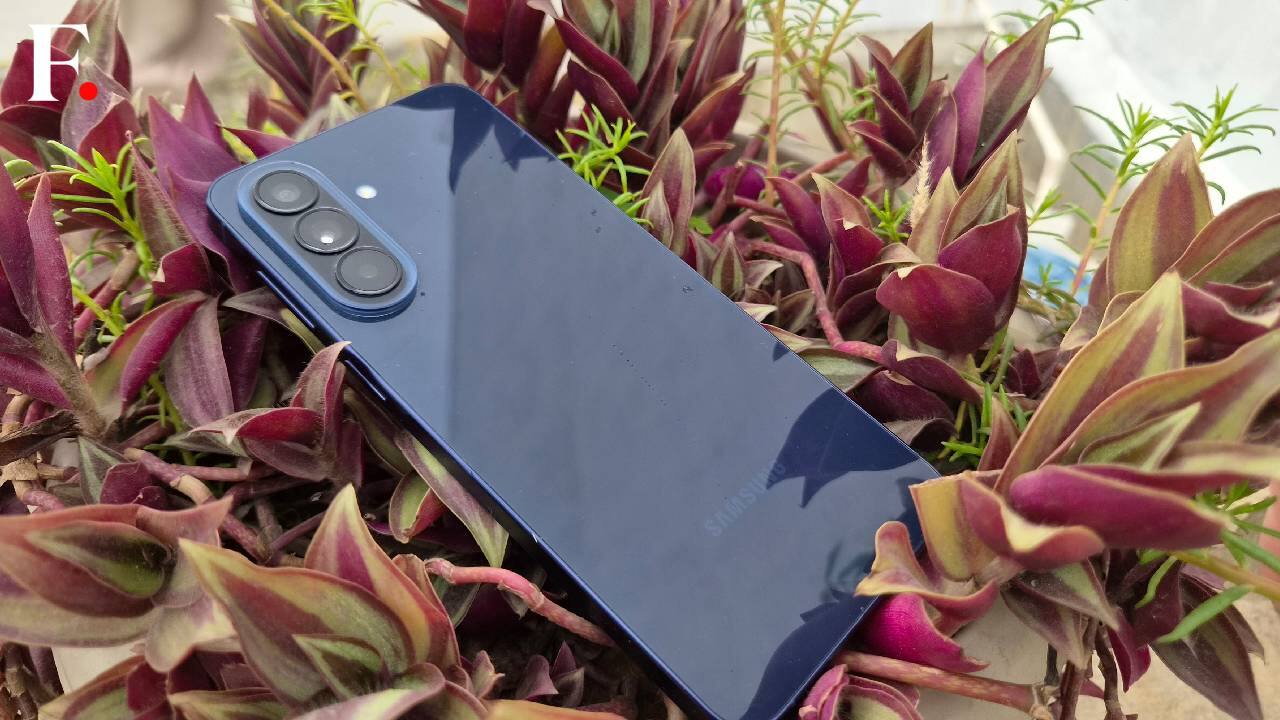
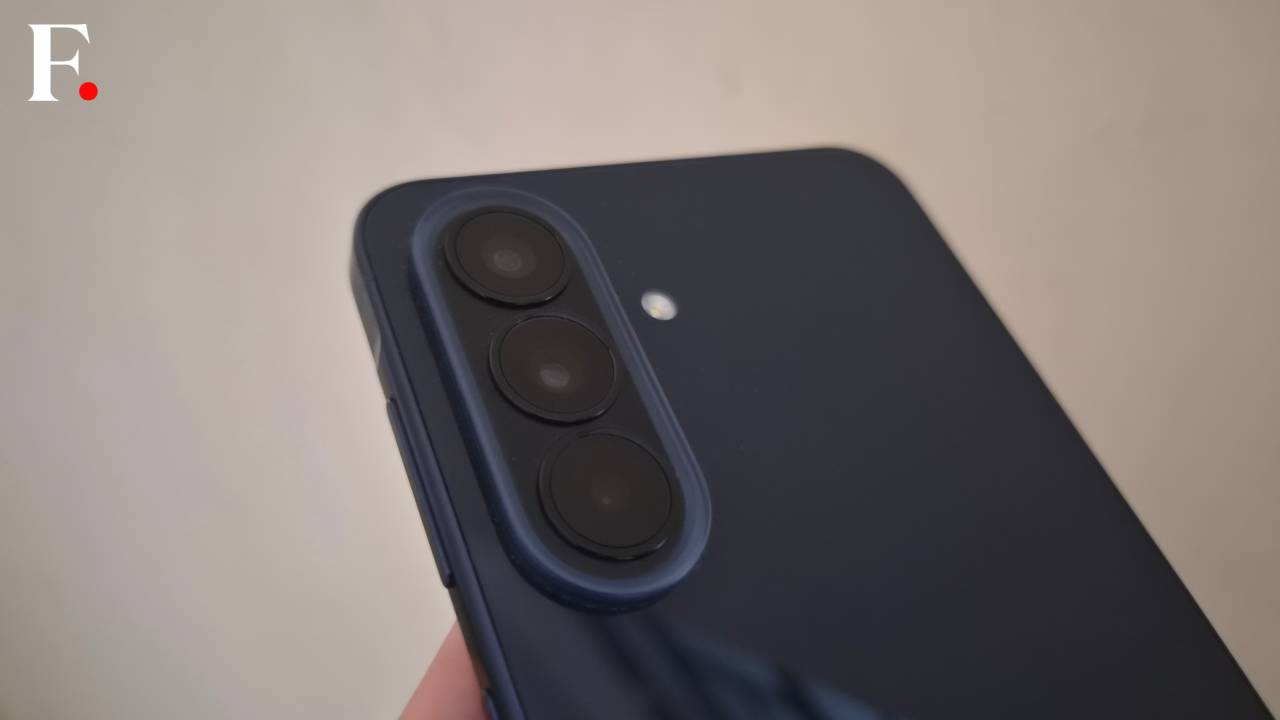
The Galaxy A57 features a glass back panel that gives it a clean, premium look. I have been using the Awesome Navy variant, and it definitely adds to that refined feel. On the rear, the pill-shaped vertical camera island does cause a minor inconvenience when placed on a flat surface. The phone tends to wobble because of the protruding module.
I noticed this quite often, especially since I tend to keep my phone face-up most of the time.

That aside, the moment you pick it up, you realise Samsung has worked on making the device slimmer and lighter. The phone measures just 6.9mm in thickness, about 0.5mm thinner than its predecessor.
This refinement makes a difference. The phone sits comfortably in the hand and slips into pockets without any fuss.
When I say it fits well in hand, it is largely because of that slim profile, especially since the display itself is quite large. The Galaxy A57 sports a 6.7-inch FHD+ flat display with thin bezels, making it a great companion for content consumption.
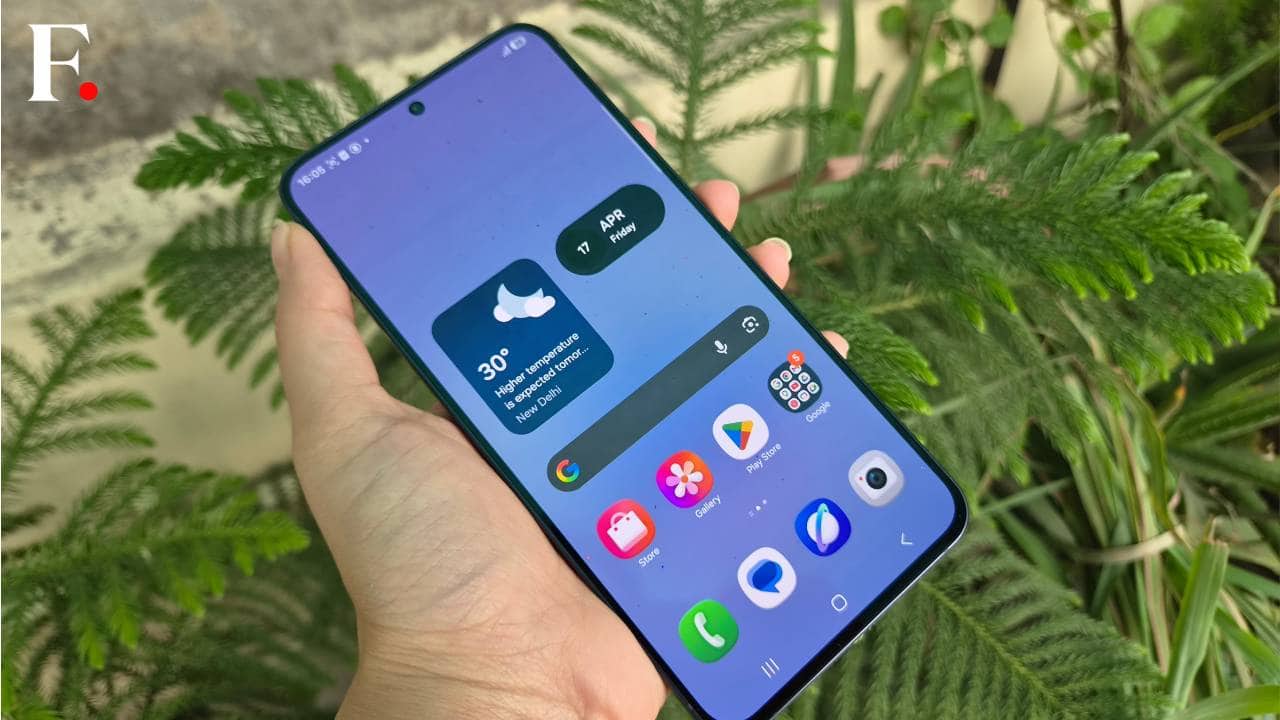
The panel supports up to a 120Hz refresh rate, HDR10+, Vision Booster, up to 1,900 nits of peak brightness, and Gorilla Glass Victus+ protection. In everyday use, the display looks vibrant, with punchy colours and strong brightness levels even under harsh sunlight, making it ideal for streaming and browsing.
Performance and battery
The Samsung Galaxy A57 is powered by an Exynos 1680 chipset, coupled with up to 12GB RAM. During the review period, I was hooked on the Hogwarts Mystery game, so much so that I may have gone a little overboard. Despite that, the performance remained smooth and largely lag-free.
When it comes to multitasking, the Galaxy A57 lives up to expectations without any fuss. It handles multiple apps with ease, and features like split-screen multitasking help double up productivity. These are capabilities you would typically associate with the Samsung Galaxy S26 Ultra (review), Galaxy S26+ and Galaxy S26 (review), which makes their presence here quite useful.

For everyday tasks like scrolling through Instagram, texting on WhatsApp, or simply browsing and reading, the experience was consistently fluid. That said, the phone does tend to heat up slightly during extended gaming sessions or heavy multitasking.
But that was not all. To get a clearer picture, we put the smartphone through benchmark tests to quantify its performance. And this is what we found:

On Geekbench, the Samsung Galaxy A57 score 1371 on single-core and 4434 on multicore
Comparing the A-series to the S-series, the most noticeable gap is in the number of AI features. The Galaxy A57 does include a set of AI tools like Object Eraser, Best Face, Bixby AI Select and Auto Trim, but the list is not as extensive as what you get on the flagship models. That said, it still manages to bring in some high-end features like Now Nudge, Call Screening and Privacy Display.
I used the Object Eraser, but I did not find it impressive. The image adds distorted pixels to fill up the erased objects from the image. In the images below, on the left, the Object Eraser struggles to stand tall to its nature.


On the software front, the Galaxy A57 runs One UI 8.5 based on Android 16, offering a familiar experience similar to the Galaxy S26 lineup right out of the box. Samsung is also promising six years of OS and security updates, which adds significant long-term value, especially at this price point.
Backing all of this is a 5,000 mAh battery. While it may not sound particularly large by 2026 standards, it performs reliably in day-to-day use. The phone comfortably lasts an entire day with mixed usage, although heavier users might still need to plug in by the end of the day.
For instance, I noted only a seven per cent drop after watching a 1 hour 20 minutes YouTube video, which is quite impressive. However, charging is where the phone feels a bit behind.
To go from 17 per cent to 100 per cent, it took around 1 hour and 10 minutes, which feels slower compared to some competitors in this segment.
Camera
The Samsung Galaxy A57 offers a versatile camera system, headlined by a 50 MP primary sensor, along with a 12MP ultra-wide lens, a 5MP macro shooter, and a 12 MP front camera. In well-lit environments, the primary sensor delivers sharp images with balanced exposure and pleasing colour tones, making it a reliable point-and-shoot option.
Daylight photography is where the phone shines, capturing scenes with strong dynamic range and consistent colour accuracy.

However, there is a warmth in the images, especially when clicked indoors. Look at the images below. The object of the image is under the same white light, but the Galaxy A57 turns it into a warm light. On the other hand, the Galaxy S26 (the second one) clicks it the image to its true nature.


The ultra-wide camera performs well in good lighting conditions.
On the front, the 12 MP selfie camera produces natural-looking images with good detail. Portrait shots are handled well too, with fairly accurate edge detection even without a dedicated telephoto lens.

While some may miss having a telephoto camera in this segment, the overall camera experience remains consistent and dependable for everyday use. Here are a few samples clicked by the Samsung Galaxy A57.








Verdict: Should you buy Samsung Galaxy A57?
The Samsung Galaxy A57 plays it safe, but it plays it well. It does not radically change the formula, but refines it in ways that matter to most users.
You get a sleek and lightweight design, an excellent display, reliable day-to-day performance, and long-term software support. These are the pillars that make the A57 a strong contender in its segment.
That said, it is not without flaws. The heating during heavy usage, relatively slow charging speeds, and the absence of a charger in the box may leave some users wanting more.
But if you are looking for a well-rounded smartphone that focuses on consistency rather than experimentation, the Galaxy A57 makes a strong case for itself.
Read More
Latest News
YC Startup School in India: Inside the youth-led AI wave redefining the future of workAsha Bhosle Funeral LIVE Updates: Jackie Shroff wipes singer's granddaughter Zanai's tears as she breaks downIran Israel War Live Updates: Nearly 1,000 pulled from Tehran rubble after strikes, Red Crescent saysIslamabad was always the wrong choice for Iran talksPoland PM in South Korea after 27 years: Tusk, Lee vow to boost weapons export from Seoul to WarsawCars burnt, roads blocked… What caused Noida workers’ protest to turn violent?Mumbai Indians freefall in numbers: From trendsetters to laggards, MI’s struggles at IPL 2026 decodedIndia palm oil imports fall 19% in March to three-month low; will it support local oilseeds?Amarnath Yatra begins from July 3: How to register (before April 15)Confusion grows as Trump, Centcom offer competing versions of Iran blockade
Most Searched Categories
* Web Stories
* World
* India
* Explainers
* Opinion
* Sports
* Cricket
* Tech/Auto
* Entertainment
* Photostories
* Lifestyle
NETWORK18 SITES
* News18
* Money Control
* CNBC TV18
* Forbes India
* Advertise with us
* Sitemap

is on YouTube
Copyright @ 2024. Firstpost - All Rights Reserved